

Driving in the Faroe Islands: a practical guide for travellers
Everything about driving in the Faroe Islands: speed limits, headlights, driving licence, single-lane tunnels, passing places, sheep, parking and winter.
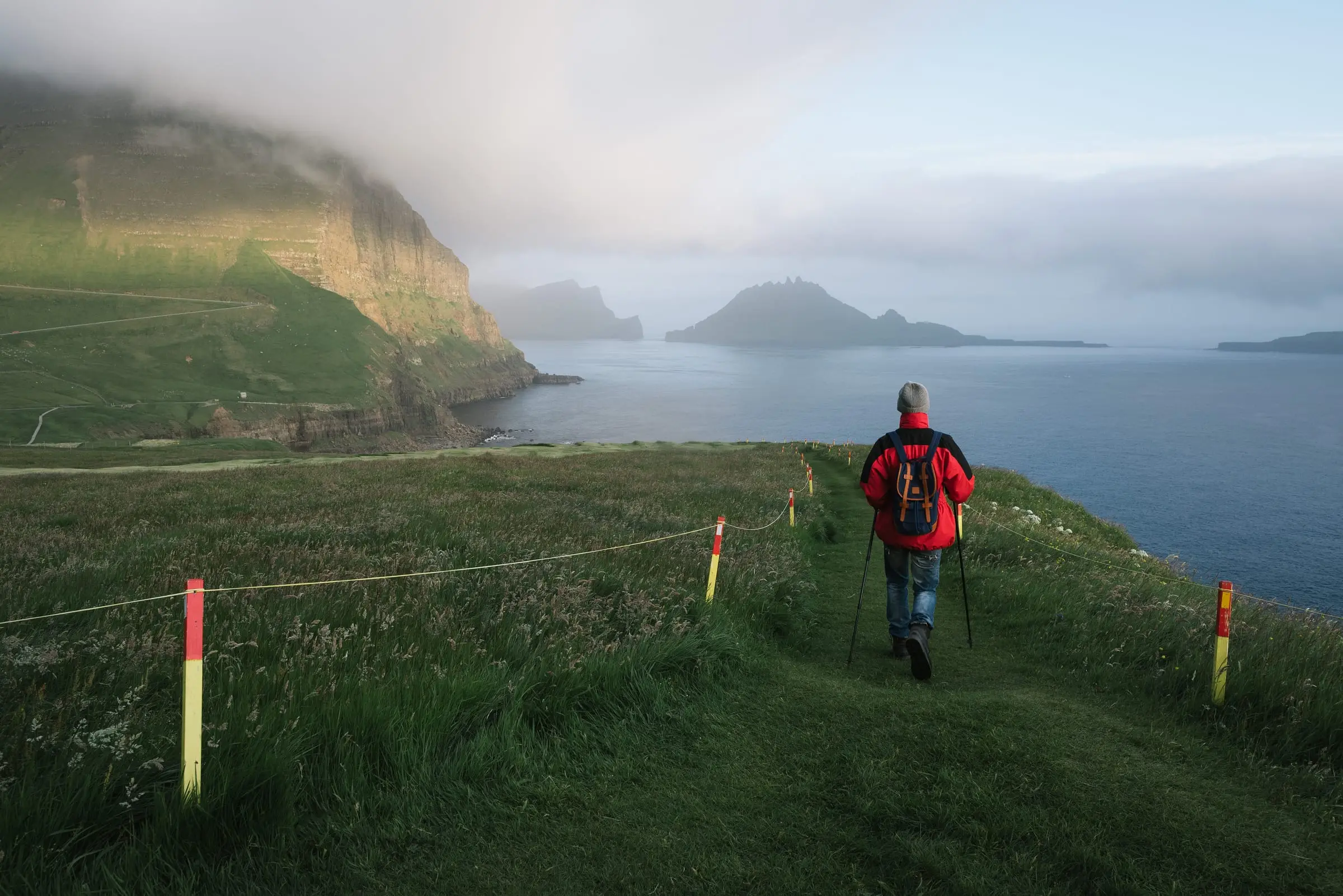
Driving is the easiest way to get around the Faroe Islands. The main roads are well surfaced, but there are things you do not see in other countries: single-lane tunnels, free-roaming sheep and weather that changes in minutes. This guide brings together the official rules and advice.
Before you set off: your licence
- Licences from the EU, Norway and Iceland: valid in the Faroe Islands.
- Licences from other countries: bring your licence and, just in case, an International Driving Permit. Ask the rental company what it will ask for when you pick up the car.
If you are hiring a car, read our car hire guide first.
The basic rules
| Rule | What it says |
|---|---|
| Speed | 50 km/h in built-up areas and 80 km/h outside them, on tarmac and gravel |
| Headlights | On at all times, day and night |
| Seat belt | Mandatory in the front and back |
| Alcohol and phones | Strictly forbidden at the wheel |
| Off-road | Driving off the roads is forbidden |
Single-lane tunnels and passing places
There are several single-lane mountain tunnels, especially in the northern islands.
- In those tunnels and on the narrow roads to the villages, be ready to reverse a fair distance to let oncoming traffic through. Visit Faroe Islands recommends practising early, before you are forced to.
- Go in slowly with your lights on, and look at the signs at the entrance.
- The passing places on the roads are for letting others pass, not for parking or taking photos.
- If someone behind you flashes their lights twice, they want to overtake. Pull over when you can.
The subsea tunnels have two lanes and a toll. Prices and how to pay are in tunnels and tolls.
Sheep on the road
Sheep graze freely and cross without looking. If you hit one, call the police on +298 351448. You will not have to pay the farmer, but if you do not report it, the farmer cannot claim on the insurance.
Parking
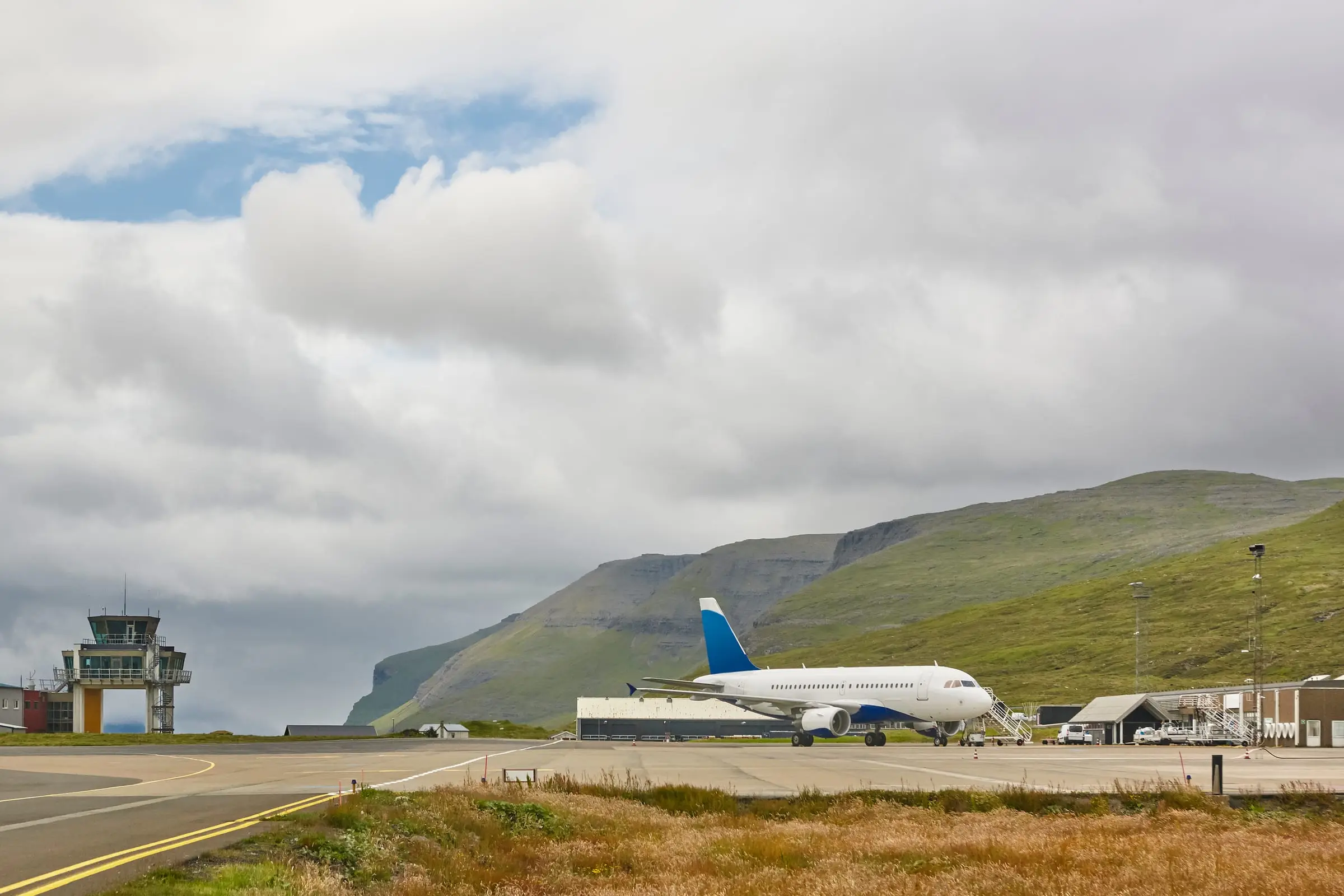
- In Tórshavn, Klaksvík, Runavík and at Vágar airport a parking disc is used in the bottom right-hand corner of the windscreen, showing your arrival time. It is free at banks and tourist offices.
- The fine for illegal parking is 200 DKK.
- In the villages, park only in marked areas. Never in passing places.
Fuel
There are petrol stations on almost every island, but distances vary. Fill up before going to small islands such as Viðoy or Kalsoy. For a guide price, see the budget.
Gravel roads
Some small villages are reached by gravel roads. Loose gravel makes braking harder: drive slowly and leave more distance.
Driving in winter
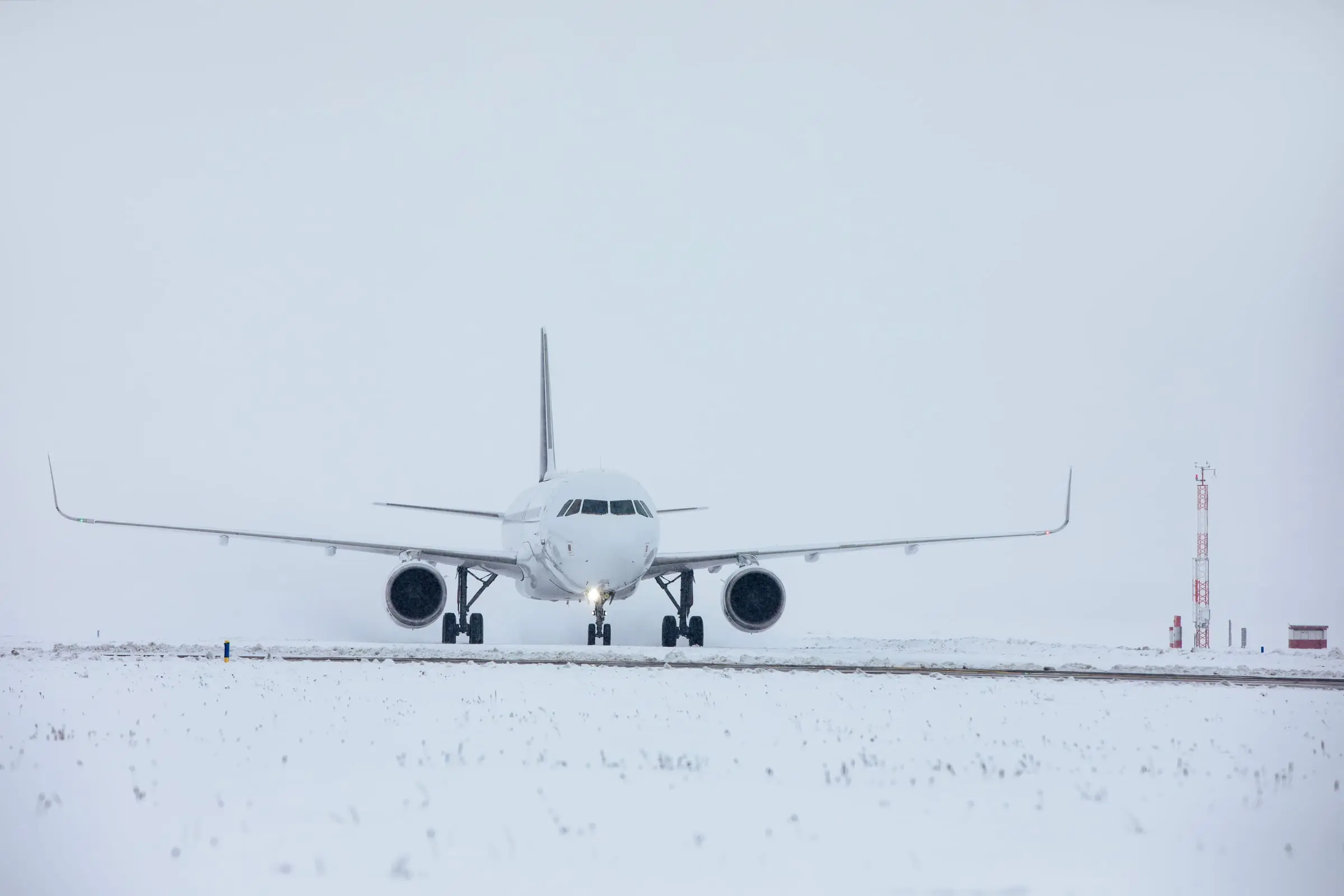
- Winter usually runs from December to February, but it can also snow in March, April and even May.
- The main roads are usually cleared of snow, but early in the morning and late in the day there can be hours without clearing.
- Some villages can be cut off by snow.
- In fog, heavy rain or sudden wind, do not go out alone without knowing the forecast.
In case of an accident
- Emergencies: 112.
- Police: +298 351448.
Frequently asked questions
Can I drive in the Faroe Islands with my licence?
Licences from the EU, Norway and Iceland are valid. If your licence is from outside Europe, ask the rental company whether it requires an International Driving Permit and bring one to avoid problems.
What is the speed limit in the Faroe Islands?
50 km/h in built-up areas and 80 km/h outside them, on both tarmac and gravel.
What should I do if I hit a sheep?
Report it to the police on +298 351448. You will not have to compensate the farmer, but if you do not report it, the farmer cannot claim on the insurance.